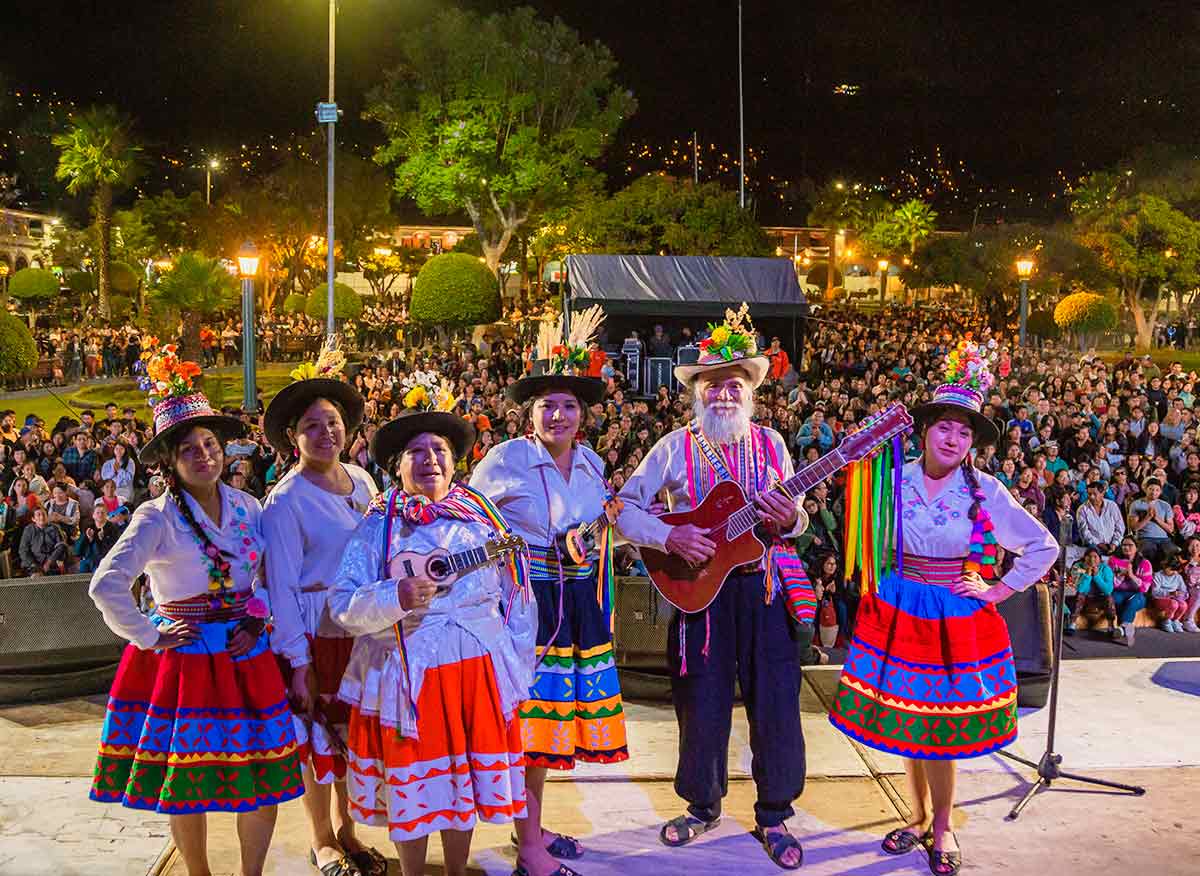
Major award for a guardian of Peruvian culture! Harpist Félix Edilberto Quispe Saire receives one of the country's most prestigious state honors. The Ministry of Culture is recognizing a musician who has dedicated himself to traditional Andean music and the famous scissor dance. His work helps preserve a unique cultural heritage for future generations.
Major honor for Félix Quispe Saire! Peru recognizes his life's work
With Ministerial Resolution No. 000395-2026-MC of October 23, 2026, the Peruvian Ministry of Culture awarded Félix Edilberto Quispe Saire the title "Personalidad Meritoria de la Cultura." The decision was published in the official gazette El Peruano on October 28. The state is thus officially recognizing his contributions to traditional Peruvian music.
The musician comes from the cultural environment of the Lucanas province in the Ayacucho region. The local government of Lucanas-Puquio had already recommended him for the award in 2024. After review by various technical departments of the Ministry of Culture, the application has now been approved. Decisive factors were his artistic career as an Andean harp performer, his role in passing on traditional music, and his contribution to preserving the scissor dance.
Harp and scissors! An extraordinary Andean tradition
The Danza de las Tijeras, or scissor dance, is one of the most impressive forms of cultural expression in the Peruvian Andes. The dancers hold two metal blades in one hand and strike them together rhythmically. Accompanied by a harp and violin, they perform sophisticated movements, acrobatic figures, and dance competitions that combine physical endurance, skill, and musical ability.
This tradition is particularly deeply rooted in the regions of Ayacucho, Huancavelica, and Apurímac. The scissor dance is much more than a performance for an audience. It combines music, community, regional identity, and traditional knowledge. Since 2010, the Danza de las Tijeras has been on the UNESCO Representative List of the Intangible Cultural Heritage of Humanity.
No scissor dance without musicians! Why the Andean harp is so important
While the dancers often take center stage with their spectacular performances, the accompanying musicians play an equally crucial role. The harp and violin set the musical course, establish the rhythm, and respond to the dancers' movements. A close interplay develops between musicians and dancers, which is essential for the traditional performance.
Over centuries, the Andean harp has developed in Peru into a distinct instrument of regional folk music. Its playing styles vary depending on the region and musical tradition. Musicians like Félix Quispe Saire not only preserve melodies and playing techniques but also pass on knowledge that cannot be fully replaced by written records.
State recognition! An award of special significance
With the title "Personalidad Meritoria de la Cultura," the Ministry of Culture honors individuals and organizations that have made a significant contribution to Peru's cultural development. The award is a public recognition of their contributions and underscores the importance of their work for the country's cultural identity.
In the case of Félix Quispe Saire, the official justification particularly highlights his career as a harpist and his contribution to passing on traditional music. His support in preserving the scissor dance of Ayacucho is also expressly mentioned. The honor makes it clear that preserving cultural heritage does not depend solely on museums, historic buildings, or state programs, but also on the people who actively practice cultural traditions.
Peru's cultural heritage lives on! But transmission remains crucial
Traditional music and dances are an important part of cultural life in Peru. They are maintained at festivals, religious celebrations, and community events. Especially in the Andean regions, they are closely linked to the history and identity of the local population.
Félix Quispe Saire's state honor therefore draws attention to a central task: traditional knowledge must be passed on to younger generations so that it is not lost. This requires experienced musicians, interested young artists, and communities that continue to nurture their cultural expressions.
With Félix Quispe Saire, Peru is not only honoring an outstanding representative of Andean music. The country is also recognizing a living tradition whose future depends on the people who preserve and pass it on.
Sources
Diario Oficial El Peruano, October 28, 2026; Ministerio de Cultura del Perú, Ministerial Resolution No. 000395-2026-MC of October 23, 2026; UNESCO, entry for the Danza de las Tijeras.