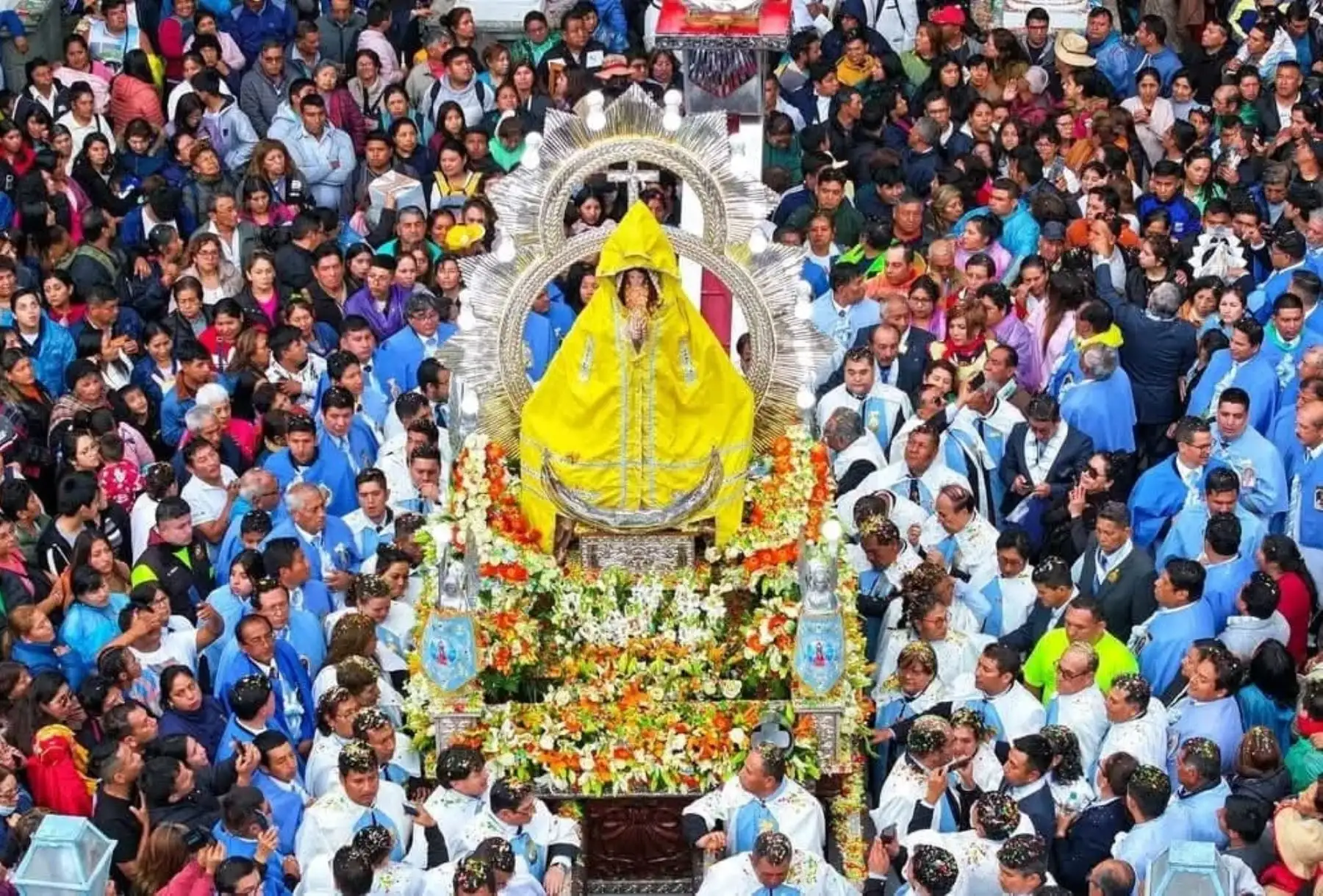
Who are the Canonesas de la Cruz?
The Canonesas de la Cruz are a Catholic community of women founded in Lima in 1919. Their name can be translated as Canonesses of the Cross.
The community combines a contemplative life of faith with concrete apostolic work. Prayer, liturgy, catechesis, and educational work are closely linked.
At the center is the mystery of the cross. It is understood not only as a sign of suffering, but also as an expression of devotion, redemption, and responsibility for others.
The Canonesas de la Cruz are part of the religious and social history of Peru. Their development shows how Catholic communities have shaped education and parish work in the country.
An important correction regarding history
The Canonesas de la Cruz were not founded in the 17th century by Rose of Lima. The community emerged much later.
The founder was Teresa de la Cruz Candamo. She established the congregation on September 14, 1919, in Lima.
Rose of Lima remains a significant figure in the Catholic tradition of Peru. However, she is not part of the founding history of the Canonesas de la Cruz.
The community's history begins in the early 20th century. It therefore does not belong to the colonial period, but to a phase of social and religious change in the Republic of Peru.
Mother Teresa de la Cruz Candamo
Teresa de la Cruz Candamo was born on August 19, 1875. She was the daughter of the Peruvian president Manuel Candamo and his wife, Teresa Álvarez-Calderón.
Her background allowed her to receive a good education. At the same time, she developed a strong religious calling and sought a form of life that combined prayer with active service.
Even before the official founding, she was active in catechesis together with her sister María and other companions. Between 1907 and 1919, they worked, among other things, in the area of the El Sagrario parish in the center of Lima.
On April 3, 2009, Pope Benedict XVI recognized her heroic virtues. Since then, she has held the title of Venerable Servant of God in the Catholic Church.
You can read more about her history in the article Mother Teresa de la Cruz.
Sights in Peru
All sightsYou can find more information under "All sights".
The founding in 1919
The emergence of the community was a long process. As early as 1914, Teresa de la Cruz asked for permission for a new religious foundation.
On September 14, 1919, the congregation was finally officially founded. The date is no coincidence: the Catholic Church celebrates the Feast of the Exaltation of the Holy Cross on this day.
The community developed its own identity. It was influenced by the Canons of the Immaculate Conception and their liturgical tradition.
The connection between a life of faith and apostolate became the enduring core of the Canonesas de la Cruz.
What does the name mean?
The name Canonesas de la Cruz refers to service in the Church and the spirituality of the cross.
According to the community, Teresa de la Cruz was inspired by early church ministries. The sisters wanted to participate in catechesis and liturgy and support church parish work.
The Canonesas de la Cruz are not a mere copy of an older community. They developed their own rule and profile.
It is precisely this combination of tradition and individual development that makes their history interesting.
The Rule of Saint Augustine
The Rule of Saint Augustine initially played a role in the development of the community. It shaped concepts of prayer, living together, and religious community.
Later, however, the Canonesas de la Cruz followed their own path and adopted their own rule. Therefore, it would be inaccurate to simply equate their current way of life entirely with the Rule of Augustine.
History shows that religious communities do not remain static. They preserve their roots while simultaneously developing a form that suits their own mission.
Latest news from Peru
All newsYou can find more information under "All news".
Liturgy as the spiritual center
Liturgy occupies a special place in the life of the Canonesas de la Cruz. This includes communal prayer, the celebration of faith, and orientation toward church tradition.
The importance of the Divine Office and liturgical spirituality was emphasized as early as the 1925 Constitutions. The Eucharist also plays a central role.
This spiritual center is not intended to separate them from everyday life. Rather, it forms the foundation for service in parishes, schools, and other fields of work.
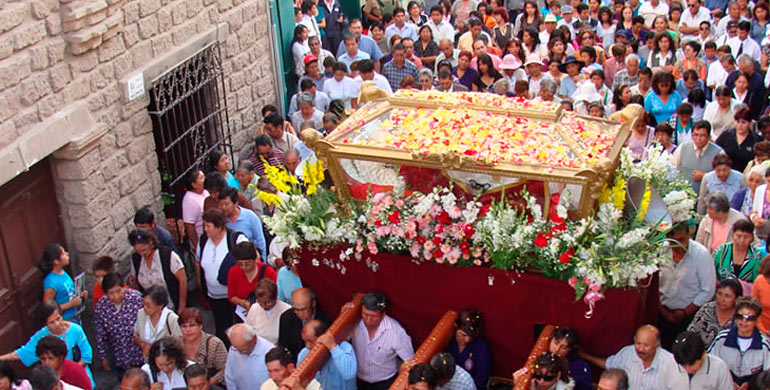
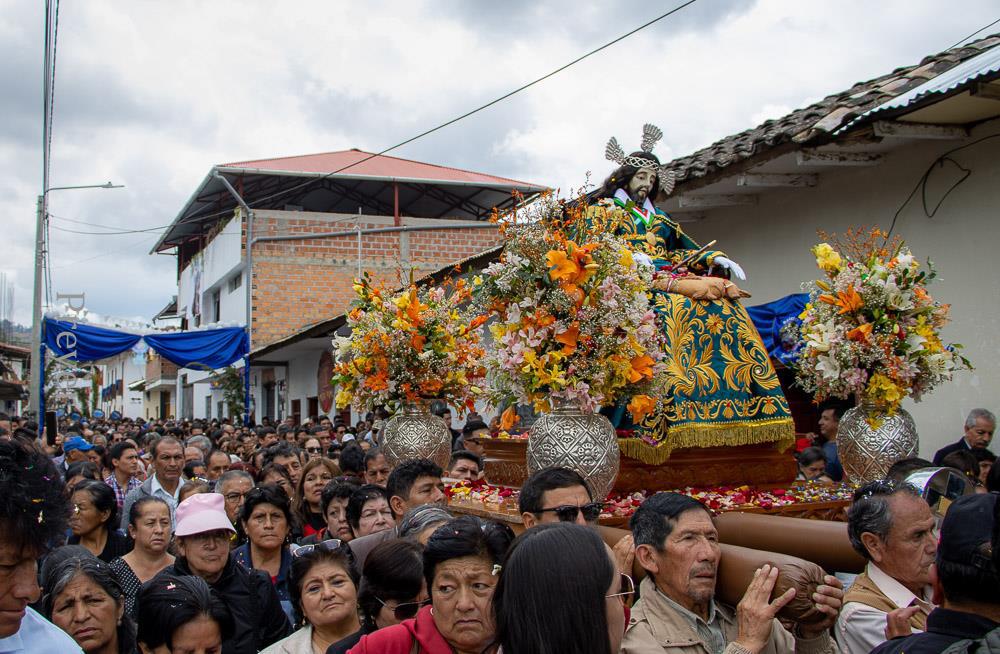
Catholic tradition remains an important component of Peruvian culture to this day. It is particularly visible during festive seasons such as Easter in Peru.
Catechesis as a mission
Catechesis is one of the most important fields of activity for the Canonesas de la Cruz. Even before the official founding, Teresa de la Cruz and her companions were engaged in religious education.
Their work was aimed at children, young people, and families. They supported parishes, accompanied preparation for First Communion, and sought out people who did not come to church institutions on their own.
The community did not understand catechesis as dry instruction. It was meant to make faith understandable and bring it into everyday life.
This approach continues to shape the Canonesas de la Cruz to this day.
Education and schools
The Canonesas de la Cruz are active in the field of education. Their schools combine academic education with ethical and religious guidelines.
It is not just about technical knowledge. The community values personal development, a sense of responsibility, and social sensitivity.
The educational work shows how the founder's original concern continues to have an effect: young people should be accompanied and strengthened.
This aspiration remains relevant even in a modern society. Education determines opportunities, participation, and the future.
Events in Peru
To the calendarYou can find more information under "To the calendar".
Social responsibility
The community combines its religious mission with concrete proximity to people. Early reports mention visits to the sick, support for families, and help for those in need.
This social responsibility follows from the faith understanding of the Canonesas de la Cruz. People should not only be addressed, but accompanied.
The original text mentioned hospitals and orphanages in general terms. No generally valid proof can be found for this as a central focus of the congregation.
What can be proven, however, are catechesis, liturgy, educational work, and practical assistance for people in difficult life situations.
The community beyond Peru
The Canonesas de la Cruz are active not only in Peru. The community is also present in other countries.
Their work was taken to Chile, Argentina, Venezuela, Italy, and Albania, among others.
However, the starting point remains Lima. A Peruvian community emerged there whose mission continued to develop over the course of a century.
This history shows a lesser-known side of Peru: the country is not just defined by its landscapes, cuisine, and archaeological sites. Religious communities are also part of its social and cultural development.
Timeline
These pages lead further into the religious, cultural, and social history of Peru.
Frequently asked questions about the Canonesas de la Cruz
Who founded the Canonesas de la Cruz?
The community was founded by Mother Teresa de la Cruz Candamo.
When were the Canonesas de la Cruz founded?
The founding took place on September 14, 1919, in Lima.
Were the Canonesas de la Cruz founded by Rose of Lima?
No. Rose of Lima lived in the 16th and 17th centuries. The Canonesas de la Cruz were only formed in 1919.
What are the tasks of the Canonesas de la Cruz?
Their central tasks include liturgy, catechesis, educational work, and accompanying people.
What role does the cross play?
The cross is at the center of their spirituality. It is understood as a sign of devotion, redemption, and lived responsibility.
Are the Canonesas de la Cruz only active in Peru?
No. The community is also present in other countries, including Chile, Argentina, Venezuela, Italy, and Albania.
Canonesas de la Cruz – History of the congregation
Canonesas de la Cruz – Biography of Mother Teresa de la Cruz Candamo
Canonesas de la Cruz – Information on charisma and mission
Canonesas de la Cruz – Information on liturgy and catechesis
Canonesas de la Cruz – Information on the community's schools
Municipalidad de Pueblo Libre – Tribute on the 100th anniversary of the congregation
General literature on the Catholic social and educational history of Peru





















.jpg?width=960)































.jpg?width=960)