Who was José Balta?
José Balta y Montero was a Peruvian military officer and politician. He was born on April 25, 1814, in Lima and ruled Peru from 1868 to 1872.
His presidency occurred during the late phase of the Guano Age. Exporting this valuable natural fertilizer had brought Peru significant revenue. At the same time, there was growing pressure to modernize the country and create new transport routes.
Balta focused primarily on the expansion of the railway system. His government therefore represents a belief in progress and major construction projects, but also rising debt and risky financial decisions.
Further background on the era can be found on the page about the history of Peru.
Early years and military career
Balta began a military career early on. In 1830, he entered the Colegio Militar. Three years later, he completed his training as a second lieutenant.
His career path went through numerous conflicts of the early Republic. He initially supported the government of Luis José de Orbegoso and later Felipe Santiago Salaverry.
After Salaverry's defeat, Balta fought against the Peru-Bolivian Confederation. Among other things, he took part in the battles of Portada de Guías, Buin, and Yungay.
These experiences shaped him as a military man. At the same time, they show how strongly the political development of 19th-century Peru was determined by armed conflict.
The uprising against Mariano Ignacio Prado
In the 1860s, Balta came into conflict with the government of Mariano Ignacio Prado. After a period in exile, he returned to Peru in 1867.
He organized resistance against Prado in the north of the country. Chiclayo in particular played an important role in this. The city became a center of the uprising.
The revolt also found support in other regions. After Prado's fall, the transitional government prepared for new elections.
Balta won the presidential election and took office on August 2, 1868.
José Balta was not known for Peru's first railway. This had been operating between Lima and Callao since 1851. His government opted for a much larger network intended to connect the coast and the highlands.
Sights in Peru
All SightsYou can find more information via "All Sights".
Peru in the Guano Age
In the 19th century, guano was an internationally sought-after natural fertilizer. Large deposits had accumulated on islands off the coast of Peru.
The export brought the state significant revenue. These funds opened up opportunities for infrastructure, administration, and public projects.
However, dependence on a single export product was dangerous. Revenue was sometimes tied up in advance, while loans and expenditures increased.
Balta's government wanted to take advantage of the economic opportunities. In doing so, it accepted financial risks, the consequences of which would occupy Peru for a long time.
The Dreyfus Contract
In 1869, Peru concluded the so-called Dreyfus Contract with the French trading house Dreyfus Frères. Finance Minister Nicolás de Piérola played a central role in the negotiations.
The company received rights to market large quantities of guano on international markets. In return, it committed itself to payments and to servicing certain financial obligations of Peru.
The government wanted to use this to break away from previous Peruvian guano consignees and gain new funds for the state.
The contract was controversial from the start. It enabled investment, but also increased debt and dependence on expected export earnings.
The great railway expansion
Under José Balta, an ambitious expansion of the Peruvian railways began. Entrepreneur Enrique Meiggs played a central role.
Major projects included the Lima–La Oroya and Arequipa–Puno lines. Other lines were intended to connect coastal towns, economic hubs, and regions in the interior of the country.
The railway was seen as a symbol of progress. It was intended to promote trade, mining, and mobility, and to open up difficult geographical areas.
Construction was technically demanding and costly. The connection towards La Oroya in particular showed how ambitious the project was: the route led from the coastal region into the Andes.
Not Peru's first railway
A frequently repeated claim is that José Balta had Peru's first railway built. That is not correct.
The railway line between Lima and Callao was opened as early as 1851 during the presidency of Ramón Castilla.
Balta's significance lies elsewhere: his government turned railway construction into a large-scale modernization project. The focus was not on a single line, but on an extensive network.
This distinction is important. Balta's infrastructure policy was ambitious enough. It does not need an invented first.
Latest news from Peru
All NewsYou can find more information via "All News".
Progress on credit
The new railway lines were intended to change Peru economically. At the same time, the projects were associated with high costs.
The government took out extensive loans. Expected guano revenues served as the basis for further investment. However, expenditures increased faster than permanently available funds.
Thus, Balta's infrastructure policy became an example of the contradictions of progress. The railways were visible modernization. The debts remained a heavy burden.
Peru gained new transport routes, but not a permanently stable financial order.
The election of Manuel Pardo
In 1872, Manuel Pardo y Lavalle won the presidential election. He was the candidate of the Partido Civil and was to go down in history as the first civilian constitutional president of Peru.
His electoral victory meant a political turning point. After decades of strong military dominance, a civilian was to take over the government.
Balta accepted the result. However, factions within the military wanted to prevent the change of power.
A few days before the planned transfer of office, a coup began that shook Lima.
The coup of the Gutiérrez brothers
On July 22, 1872, the brothers Tomás, Marcelino, Marceliano, and Silvestre Gutiérrez rose up. All four were officers in the Peruvian army.
Tomás Gutiérrez declared himself supreme ruler. President Balta was arrested.
However, the coup plotters met with resistance. Parts of the population of Lima and the navy rejected the overthrow. The situation escalated within a few days.
The coup was not led by Nicolás de Piérola. Piérola had previously been finance minister under Balta and only became a central figure in Peruvian politics later on.
Events in Peru
To the CalendarYou can find more information via "To the Calendar".
The assassination of José Balta
On July 26, 1872, José Balta was murdered while in captivity. The act occurred in the chaos of the failed military coup.
Historical court records state that the perpetrators acted on the orders of Marcelino Gutiérrez. Shortly before, his brother Silvestre had been killed.
Several Gutiérrez brothers also died during the unrest. The uprising collapsed. Manuel Pardo subsequently took over the presidency as planned.
Balta's end is one of the most dramatic moments in the republican history of Peru.
How should José Balta be classified?
José Balta was a modernizer with great ambitions. His government focused on railways, public projects, and a stronger economic development of the country.
At the same time, the financing of these projects exacerbated Peru's debt problems. The Dreyfus contract and the credit policy therefore remain important components of his historical assessment.
Balta was neither just a visionary bringer of progress nor just a reckless spendthrift. His policy shows how closely modernization, raw material exports, and financial risks were intertwined.
His story also tells of Peru's difficult development from a militarily dominated republic to a more stable civilian order.
Timeline
These pages supplement the history of José Balta and provide further insight into the development of Peru.
Frequently asked questions about José Balta
Who was José Balta?
José Balta was a Peruvian military officer and politician. He ruled Peru from 1868 to 1872.
What was the Dreyfus contract?
The 1869 contract granted the French trading house Dreyfus Frères rights to the international marketing of large quantities of guano. In return, Peru received payments and financial commitments.
Did José Balta build Peru's first railway?
No. The Lima–Callao railway line was opened as early as 1851. Balta represents a significantly larger expansion of the railway network.
Which railway projects were particularly important?
Major projects included the Lima–La Oroya and Arequipa–Puno lines.
Who staged the 1872 coup against José Balta?
The Gutiérrez brothers led the military coup. They wanted to prevent the inauguration of the elected civilian president, Manuel Pardo.
When did José Balta die?
José Balta was murdered on July 26, 1872, during his imprisonment in Lima.
Congreso de la República del Perú – Presidential message of José Balta from 1872
Congreso de la República del Perú – Historical documentation on Enrique Meiggs and railway construction
Ministerio de Cultura del Perú – Documents on the revolution of Colonel Tomás Gutiérrez
Tribunal Constitucional del Perú – Historical court records on the assassination of José Balta
National Library of Peru – Historical documents regarding Enrique Meiggs and the railways of Peru
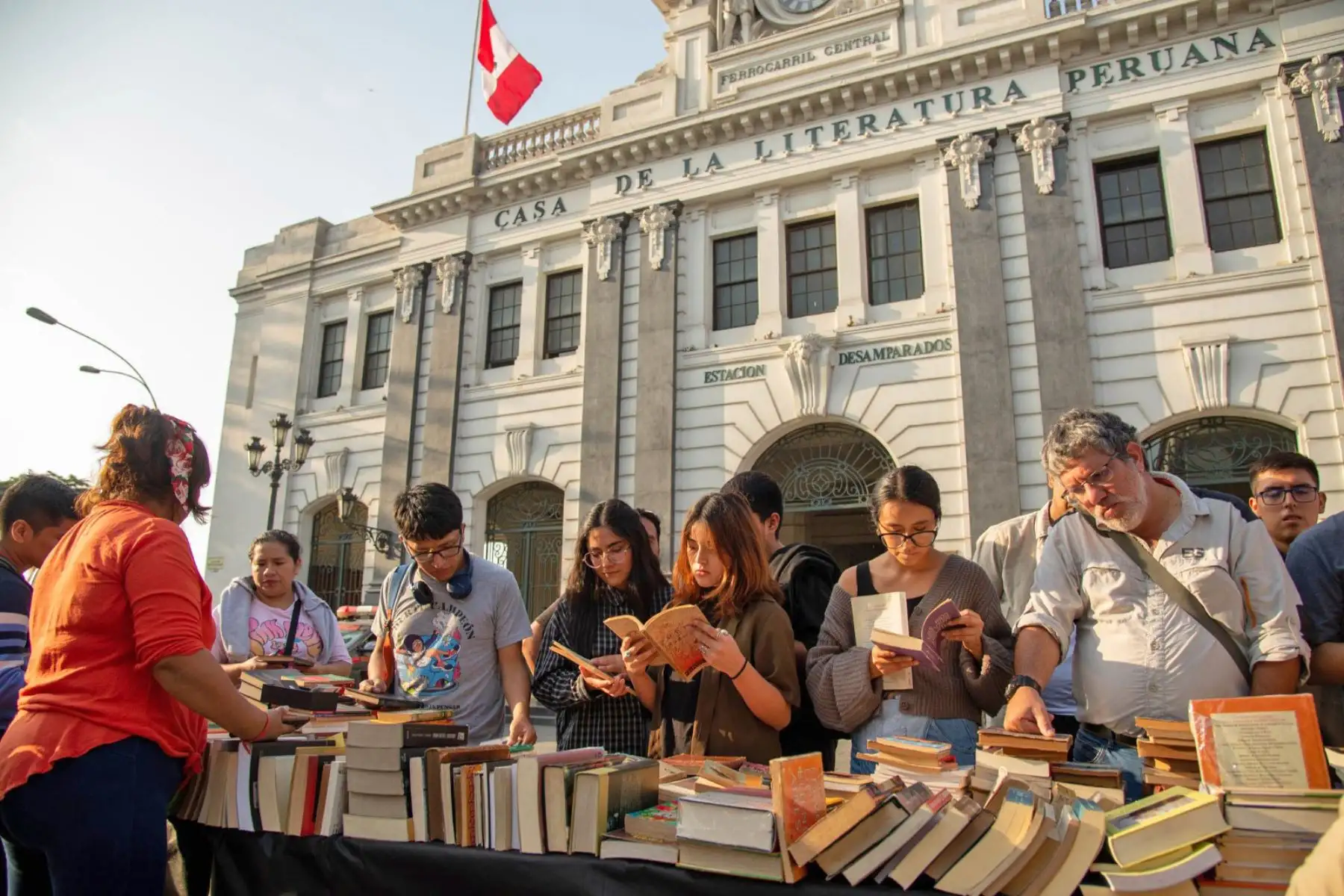
House of Peruvian Literature – History of the Central Railway
Jorge Basadre – History of the Republic of Peru





















.jpg?width=960)



























.jpg?width=960)