

Chotuna-Chornancap – Pyramids, Naylamp, and the Ruler of Lambayeque
Chotuna-Chornancap combines monumental adobe pyramids, palace and ritual areas, the legend of Naylamp, and the extraordinary elite burial of the Ruler of Chornancap.
Travel conditions today in Chotuna-Chornancap
Weather for Lambayeque, travel recommendations, and Perusino's tip. On the open terrain, the sun and wind can be significantly stronger than in the city.
Weather today
The current conditions for Lambayeque are being retrieved.
Live update active.
Consider the sun and time of day.
Start as early as possible, bring enough water, and expect very little shade on the open terrain.
Visit at a glance
- Region
- Lambayeque
- Best time to visit
- Year-round, mornings are particularly pleasant
- Opening hours
- Approx. 09:00–16:00; check current times before heading out
- Focus
- Huaca Chotuna · Huaca Chornancap · Site Museum
- Getting there
- Via Lambayeque towards San José and Bodegones
Visitor information: Ministry of Culture of Peru · Chotuna-Chornancap Site Museum
Places and experiences
Overview of Chotuna-Chornancap
Chotuna-Chornancap is located west of the city of Lambayeque, just a few kilometers from the Pacific coast. The extensive archaeological complex is one of the most important sites of the Lambayeque or Sicán culture and includes monumental adobe structures, plazas, ramps, walled areas, and zones with religious and political functions.
Huaca Chotuna and Huaca Chornancap are particularly defining. Both sites show that this was not just home to individual temples, but an entire cultural landscape with representative architecture. Traces of later use extend into the Chimú and Inca periods.
For visitors, the site combines archaeological research with one of the best-known origin myths of northern Peru: the tradition of Naylamp. At the same time, the burial of a high-ranking woman in Chornancap highlights how complex power and religious authority were organized on the northern Peruvian coast.
Sights in the region
All sightsLatest news from the region
All newsPhoto gallery


Why Chotuna-Chornancap is special
Chotuna-Chornancap is special because monumental architecture, religious beliefs, and political power come together in a compact space here. The structures are not isolated pyramids, but part of a larger cultural landscape where plazas, ramps, palace areas, and ritual zones were interconnected.
Additionally, there is the Naylamp tradition. According to legend, Naylamp and his retinue reached the coast by sea and founded a seat of power where the image of Yampallec was worshipped. Archaeology cannot confirm this as the biography of a single historical individual, but Chotuna-Chornancap possesses exactly the maritime symbolism and monumental significance that make the site important for studying the tradition.
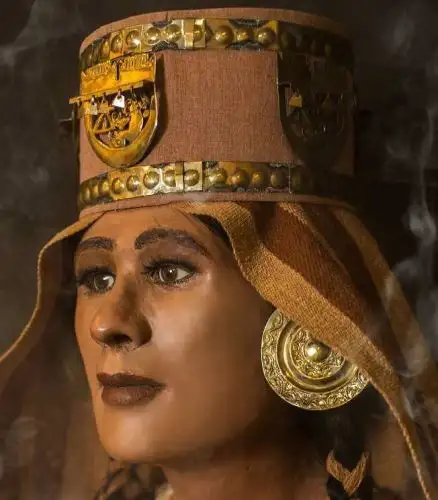
Another key is the female elite burial of Chornancap. It shows that political and religious authority in the Lambayeque culture was not exclusively reserved for male rulers.
The most important areas of Chotuna-Chornancap
The complex spans a large area. For your visit, Huaca Chotuna, Huaca Chornancap, the palace and ritual areas, and the Site Museum are the most important features.
Huaca Chotuna
Huaca Chotuna is the most prominent monumental structure in the complex. The adobe pyramid reaches a height of approximately 40 meters and features a long ramp. Archaeological investigations have also documented large walled rooms and other architectural areas that indicate administrative, craft, or ritual functions.
The rounded shapes visible today should not be mistaken for their original appearance. Adobe structures were plastered, partially painted, and designed with much sharper edges. Wind, humidity, and heavy rain have changed many surfaces over the centuries.
Huaca Chornancap
Huaca Chornancap is located west of Chotuna and has its own monumental complex with a ramp. A large plaza, polychrome wall paintings, and other representative areas have been documented there. Research has shown that Chornancap was an independent political-religious center within the overall complex.
Palace and ritual areas
South of Huaca Chornancap, an architectural complex was uncovered that is interpreted as a palace area. Rooms, courtyards, gathering areas, storehouses, and ritual zones suggest that high-ranking individuals not only were buried here but also lived and wielded power.
Site Museum
Opened in 2009, the Site Museum is the best way to begin your visit. Models, ceramics, metal objects, friezes, photographs, and reconstructions put the Lambayeque culture and the excavations into context. One exhibit also depicts the arrival of Naylamp and his retinue.
Friezes and maritime symbolism
The coast, the sea, and animals from the maritime world play an important role in the symbolism of the complex. Snakes, birds, and wave and ocean motifs connect the architecture with religious concepts and help to culturally contextualize the proximity to the Pacific.
Events in the region
Go to calendarArchaeological highlights
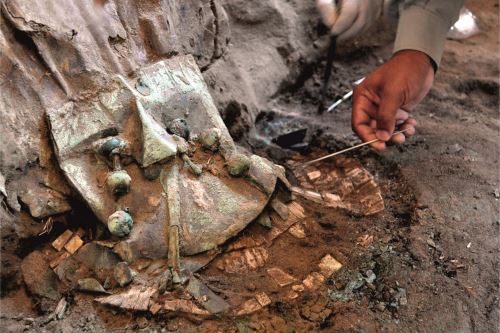
The most famous single find from Chornancap is the burial of a woman from the highest social elite, documented in 2011. The tomb was complex and contained symbols of status, jewelry, and valuable offerings, including a face mask, a crown, ear ornaments, pectorals, metal objects, ceramics, and Spondylus shells.
The grave goods and the architectural context suggest that this woman held both political and religious authority. Therefore, researchers describe her not only as a priestess but also as a ruler or a sovereign elite person.
Other archaeological highlights include polychrome wall paintings, representative plazas, ramps, palace architecture, and the large-scale adobe construction. They demonstrate how organized and resource-intensive the centers of the Lambayeque culture were.
Wildlife and coastal landscape
Chotuna-Chornancap lies in the dry coastal zone of Lambayeque. The landscape is characterized by desert, sandy areas, agricultural land, and proximity to the Pacific. This environment differs significantly from the greener valleys and dry forests further inland.
Birds of the coastal plain, small reptiles, and species adapted to arid conditions can be observed in the surrounding area. For its archaeological importance, the proximity to the sea is paramount: maritime motifs, shells like the Spondylus, and the Naylamp tradition show how strongly the coast and the sea were integrated into trade, religion, and concepts of rule.
Admission, opening hours, and visiting
Published museum information lists a regular admission of S/ 8 for adults, S/ 4 for higher education students, and S/ 1 for schoolchildren. Rates can change, so the current price should be checked with the Site Museum or the Unidad Ejecutora Naylamp-Lambayeque before setting off.
Two to four hours are sufficient for the museum and central areas. If you want to take a closer look at the architecture, take photos, and understand the connections between Chotuna and Chornancap, you should plan for half a day.
Opening hours and best time to visit
Currently published visitor information is roughly between 09:00 and 16:00. Days off or temporary closures can change due to conservation work, excavations, or weather events. You should therefore check the opening status officially immediately before your visit.
The dry north coast can generally be visited all year round. For longer walks, the morning hours and the cooler months are more pleasant. During strong El Niño phases, unusually heavy rainfall can damage the fragile adobe architecture and access roads.
Visitor notes and state of preservation
Adobe is sensitive to rain, wind, and mechanical stress. Visitors should therefore only use designated paths and neither climb on walls nor move ceramic fragments or other materials. Even inconspicuous shards are part of the archaeological record.
Parts of the complex may be closed due to ongoing research or conservation work. Instructions from staff take precedence. Drones should only be used with express permission.
How demanding is the visit?
Physically, Chotuna-Chornancap is easy to visit. The terrain is mostly flat, but sun, wind, sand, and dust can make the walk more tiring. Sturdy, closed-toe shoes are therefore recommended.
People with limited mobility should clarify in advance which parts of the outdoor area are currently accessible. The museum is more compact, while individual unpaved sections may be more difficult.
What to pack?
- Sufficient drinking water
- Sunscreen and a hat
- Light, airy clothing
- Sturdy, closed-toe shoes
- Camera or smartphone with dust protection
- A small reserve for admission and local transport costs
Accommodations in the region
Affiliate link: The map is loaded via Stay22. PeruMagazin may receive a commission for bookings; the price remains unchanged for you.Stay up to date on Peru
Travel tips and important information from Peru in the PeruMagazin WhatsApp channel.
Frequently asked questions about Chotuna-Chornancap
Where is Chotuna-Chornancap located?
The complex is located west of Lambayeque in the San José and Bodegones area, just a few kilometers from the Pacific coast.
Why is the Ruler of Chornancap so important?
Her elaborate elite burial and the associated palace architecture prove the exceptionally high political and religious status of a woman within the Lambayeque culture.
Is Naylamp archaeologically proven?
No. The tradition cannot be proven as the biography of a single historical individual. However, the complex has findings and maritime symbolism that are particularly important for the study of this tradition.
How much time should I plan for the visit?
Two to four hours are reasonable for the museum and central areas. If you want to take more extensive photos and view the complex in more detail, you should plan for half a day.
What other destinations can be combined with Chotuna-Chornancap?
Túcume, Bosque de Pómac, Huaca Ventarrón, and the museums in Lambayeque can easily be combined into a multi-day archaeology route.
Sources
- Ministry of Culture of Peru – Chotuna-Chornancap Site Museum
- Unidad Ejecutora 005 Naylamp-Lambayeque
- MINCETUR – Inventory of Tourism Resources
- Agencia Andina – Reports on the Ruler of Chornancap and archaeological research
- Image sources: TVPerú · Ministry of Culture of Peru / Museums · Agencia Andina


