
Juliaca
Juliaca is the bustling gateway to the Altiplano: high-altitude, direct, vibrant, and excellently connected. The city combines markets, Andean daily culture, and short distances to Lampa, Sillustani, Puno, and Lake Titicaca.



The Altiplano starts with speed.
Juliaca is located at an altitude of approximately 3,824 meters on the Collao plateau and is the most important transportation hub in the northern Puno region.
For many travelers, the city is a practical entry point into the Peruvian Altiplano. Air traffic, bus routes, trade, and regional connections converge here.
Juliaca is less of a postcard backdrop and more of a functioning Andean city. This is precisely its appeal: markets, street life, trade, regional cuisine, and proximity to some of the region's most important destinations.

Juliaca is not a stopover. Juliaca is a hub.
Here, roads branch off to Puno, Lake Titicaca, Lampa, Pucará, Sillustani, and further towards Cusco or Bolivia.
What makes Juliaca special
Juliaca thrives on movement. Trade, traffic, and Andean culture shape daily life more than classic tourist staging.
Over 3,800 meters of altitude define the climate, light, and the vast landscape surrounding the city.
Juliaca is one of the most important trading centers in southern Peru and is bustling accordingly.
The airport and roads make the city a practical starting point for the Puno region.
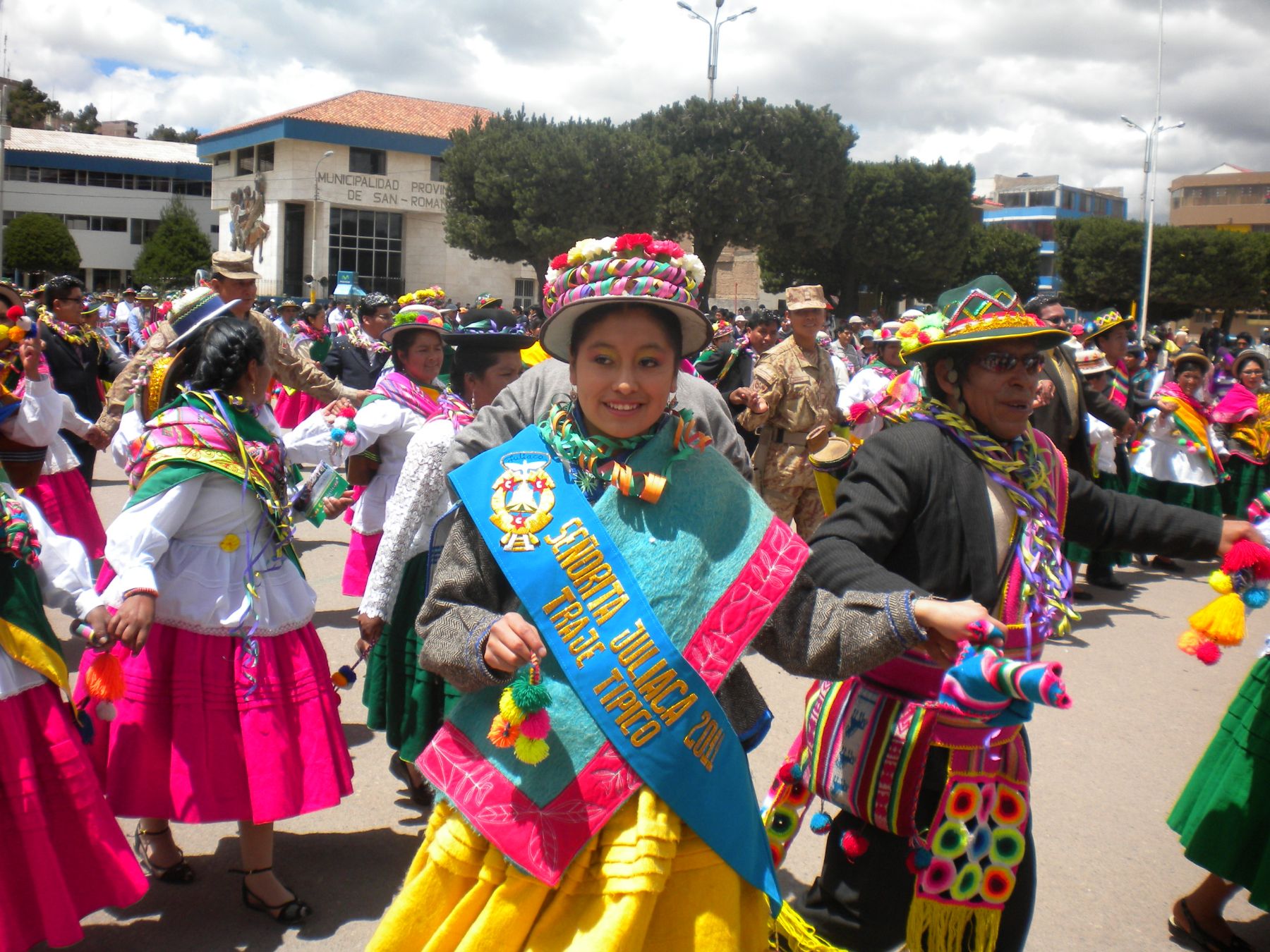
Festivals, markets, clothing, music, and everyday life showcase a modern city with strong regional roots.
Places and experiences around Juliaca
For visitors, Juliaca functions best as a city base for the northern Altiplano. The city center, markets, neighboring towns, and archaeological sites can be easily combined.
Plaza de Armas: Juliaca at its center.
The Plaza de Armas is the best starting point to get a first impression of Juliaca. Public buildings, shops, and the Iglesia Matriz de Santa Catalina are located around the square.
The atmosphere is less museum-like than in many more touristy cities. That's precisely what makes the square interesting: it is part of the city's daily life.
Santa Catalina: the historical face of the city.
The Iglesia Matriz de Santa Catalina dominates the Plaza de Armas and is one of the most important historical buildings in the center of Juliaca.
If you want to see the city as more than just a transport hub, start here. The church, the square, and the surrounding streets give a good impression of how history and modern commercial life overlap.

Sillustani: Chullpas above Lake Umayo.
The archaeological complex of Sillustani is one of the region's most impressive excursion destinations. MINCETUR describes 91 burial towers of varying sizes and constructions.
The complex originated in the Colla culture and was later also used during the Inca period. Together with Lake Umayo, it creates one of the most impressive cultural landscapes of the Altiplano.
Lampa: the historic neighbor.
Lampa is located northwest of Juliaca and is well-suited for a day trip. The city is significantly quieter and more historically characterized than bustling Juliaca.
The Templo de Santiago Apóstol with its striking architecture is particularly noticeable. The plaza, traditional buildings, and the atmosphere of the old city form a strong contrast to the transport hub of Juliaca.
Why Juliaca makes visitors curious
Juliaca is not an over-staged place. That's precisely its advantage. The city shows how the modern Altiplano actually functions.

Pucará and Lampa: more than just a pass-through.
North of Juliaca are several destinations that can be easily incorporated into a route towards Cusco. Pucará is known for its archaeological site and the famous ceramic tradition with the Toritos de Pucará.
Lampa complements this route with historical architecture and a quieter city atmosphere. Those using Juliaca as a base can thus combine several facets of the Altiplano.
Juliaca City: practical, vibrant, and high-altitude.
For many travelers, Juliaca is the gateway to the region. Flights arrive here, buses depart from here, goods are distributed here, and important roads intersect here.
There's no need to artificially inflate the city's tourist significance. Its value lies in its location and everyday life: a functional, vibrant starting point for the Altiplano.
Practical travel tips for Juliaca
PeruMagazin on WhatsApp
New Peru content, travel ideas, and exciting topics directly in the channel.
Open WhatsApp ChannelFAQ about Juliaca
What is Juliaca known for?
Juliaca is primarily known as a trade and transportation hub of the Altiplano. The city is also an important starting point for trips through the Puno region.
Is Juliaca worth visiting?
Yes, especially as a starting point for the northern Altiplano. Those seeking urban daily life, markets, and regional culture should not just view Juliaca as a transit point.
What are the most important excursions from Juliaca?
Lampa, Sillustani, Pucará, Puno, and Lake Titicaca are among the nearby destinations.
When is a good time to visit Juliaca?
The drier months from May to September often offer clear days, but also very cold nights. More precipitation can be expected during the rainy season, between approximately December and March.
How high is Juliaca?
The city is located at approximately 3,824 meters above sea level. Careful altitude acclimatization is therefore advisable.
How many days should one plan for Juliaca?
One day is sufficient for a first impression. If you want to include Lampa, Sillustani, or Pucará, it's better to plan two to three days.
Related PeruMagazin pages
The comprehensive introduction to the country, travel planning, culture, and important topics.
Coast, Andes, Amazon, and the country's diverse landscapes.
Seasons, coastal climate, Andean weather, and Amazon humidity.
Flights, buses, taxis, rental cars, and transportation in the country.
Information on daily travel, traffic, natural hazards, and local conduct.
Sources and image credits
- Municipalidad Provincial de San Román: Tourism information on Juliaca, altitude, and location.
- MINCETUR: Inventario de Recursos Turísticos, Complejo Arqueológico de Sillustani.
- Municipalidad Provincial de Lampa: Tourism information on Lampa.
- Wikimedia Commons: "Plaza de armas Juliaca.jpg", author Jhordan Chaiña Mamani.
- Wikimedia Commons: "Lake Umayo Sillustani.jpg", author Unukorno.
- Wikimedia Commons: "Templo de Santiago Apóstol en Lampa, Puno.jpg", author Carlillasa.
- Le Routard: Street market along the tracks in Juliaca.
- Perú21: Iglesia Matriz de Santa Catalina in Juliaca.
- Agencia Andina: Carnaval de Juliaca.
- Wikimedia Commons: additional images of Juliaca, Sillustani, and Lampa; respective authors and licenses on the file pages.
