In the densely built-up district of Miraflores, archaeologists have made an extraordinary discovery. During excavations in Huaca Pucllana, human remains approximately 1,400 years old were discovered. The find dates back to the time of the Lima culture and could have been part of a ritual sacrifice.
The Peruvian Ministry of Culture announced the discovery on August 18, 2026. Preliminary investigations provisionally date the archaeological context to approximately 650 AD, meaning the find predates the Inca Empire by a long time.
Human Remains in an Underground Channel
According to the Peruvian Ministry of Culture, the discovered remains belong to an adult human. Initial investigations suggest that it was likely a man. However, not only the age of the remains is crucial. The position of the deceased, in particular, makes the discovery interesting for archaeologists.
The human remains were found in connection with an underground channel. This channel belonged to a ceremonial area of Huaca Pucllana and was connected to a shaft also used ritually. Scientists suspect that the deceased was deliberately placed there. According to the current interpretation, this could have happened during a ceremony to close the channel.
Thus, the individual would not have been a random burial. Rather, he could have been part of a religious ritual as an offering. Further investigations must now show how reliably this interpretation can be proven.
Huaca Pucllana and Archaeological Work
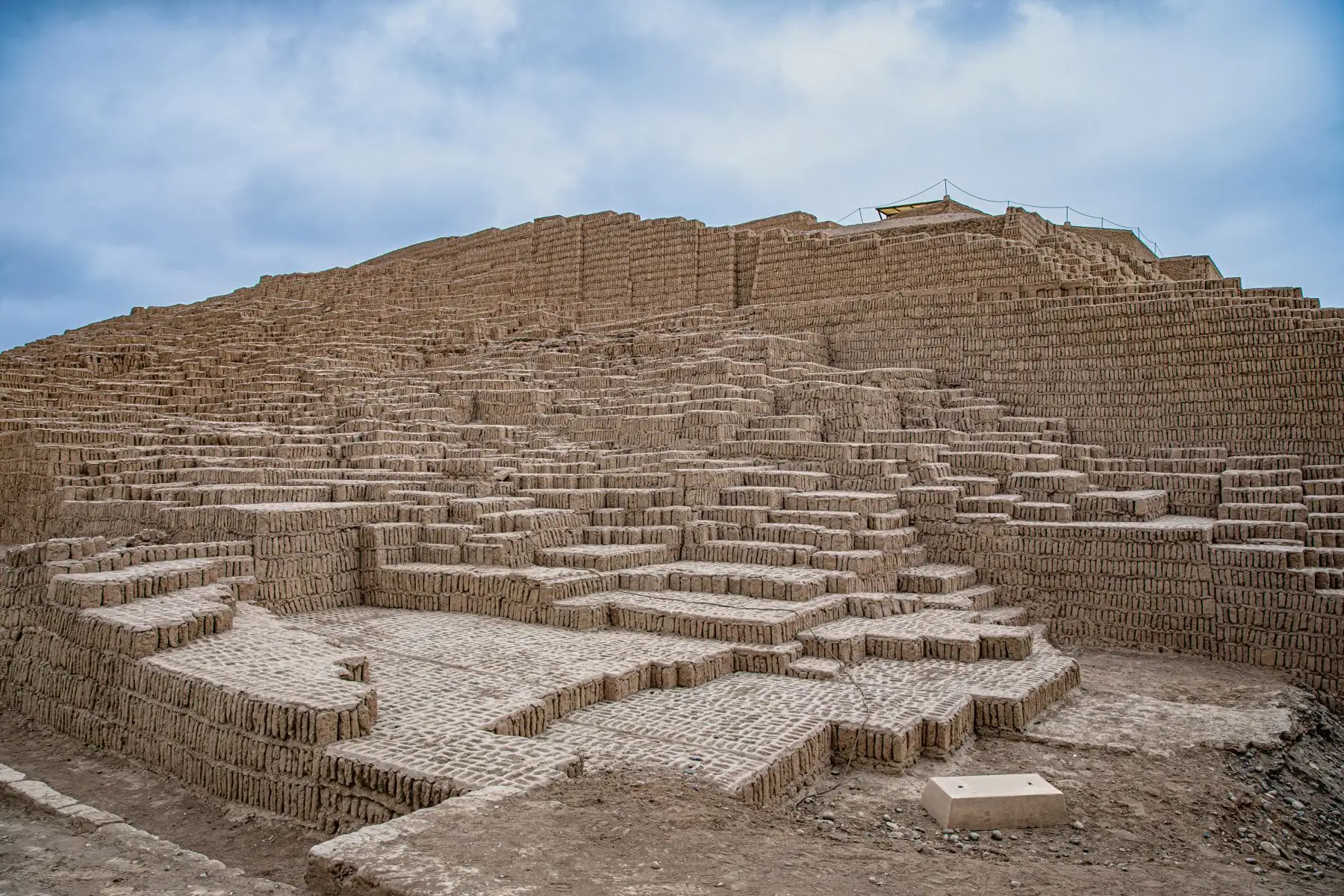
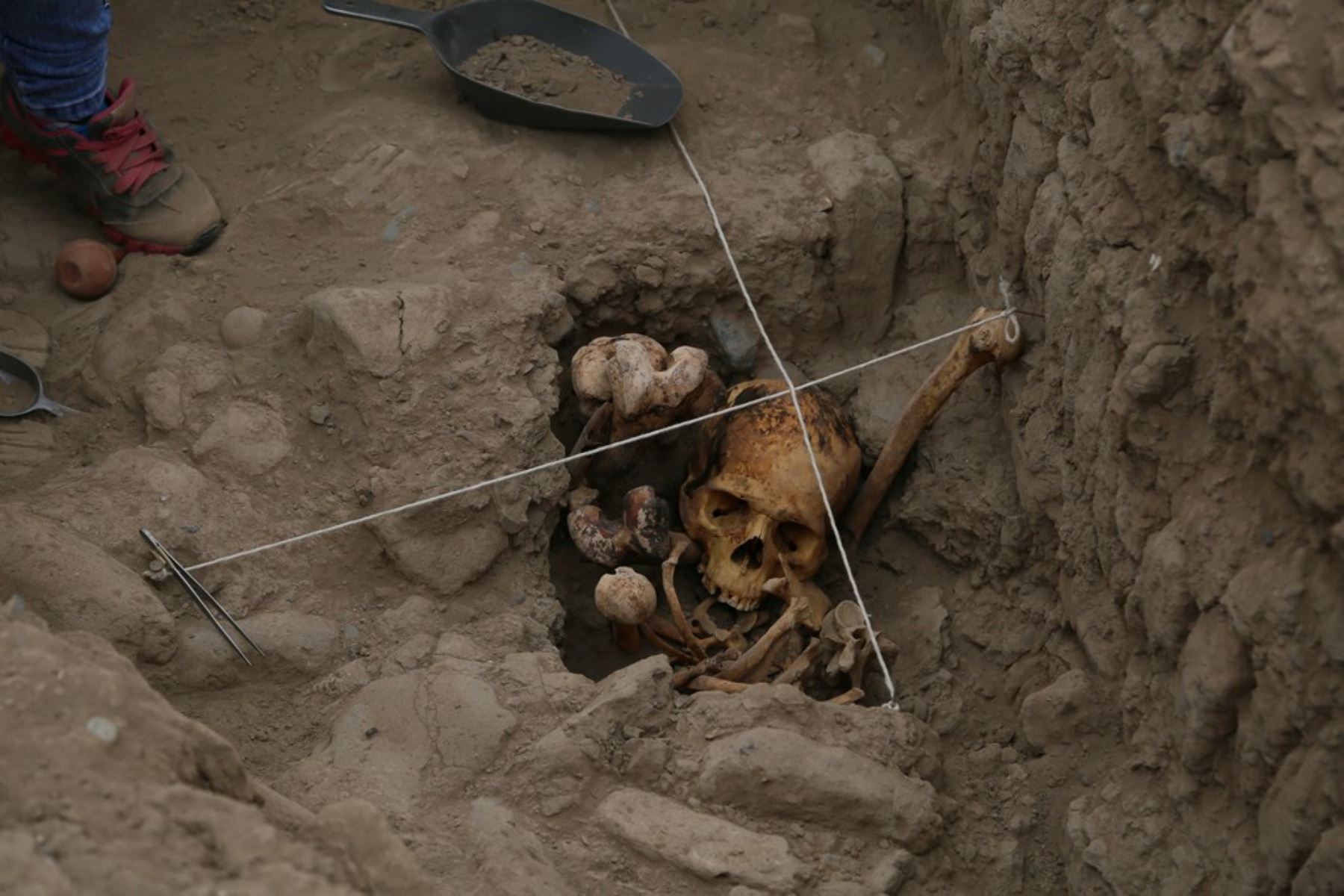
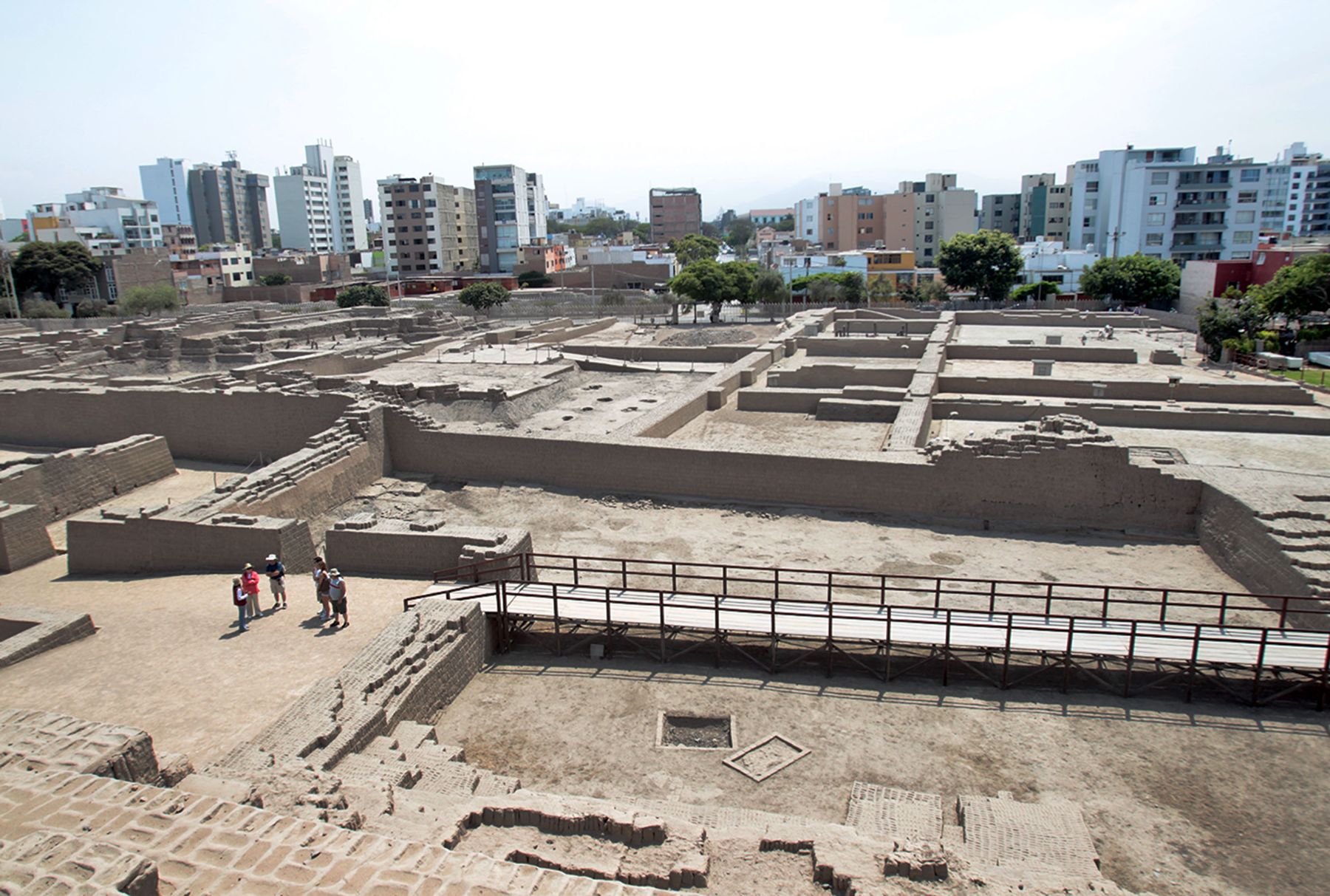
Note: The image gallery shows Huaca Pucllana and earlier archaeological work. The images do not document the human remains presented on August 18, 2026.
What the Find Reveals About the Lima Culture
The preliminary dating to approximately 650 AD assigns the find to the Lima culture. This culture developed on the central coast of present-day Peru several centuries before the rise of the Inca Empire. Huaca Pucllana was one of its important ceremonial centers.
The complex, now surrounded by modern buildings, shows how organized the area of present-day Lima already was about 1,500 years ago. The monumental structures were built from millions of small adobe bricks. Particularly striking is their vertical arrangement, often compared to a bookshelf.
The center consisted not only of the widely visible pyramid. Squares, courtyards, ramps, and other areas also belonged to the complex. Religious acts played a central role here. Previous investigations have already provided evidence of sacrifices, broken ceramic vessels, and ceremonial meals.
The new find complements this picture. Its location within a special underground structure could provide further information about the significance of certain buildings for religious acts.
Why a Channel Was Ritually Closed
From today's perspective, an underground channel initially appears as a purely technical construction. However, in pre-Columbian societies, structures could have both practical and religious functions simultaneously.
The deliberate closing of a building or facility could therefore be accompanied by rituals. Offerings, for example, marked the end of a period of use or a structural change. Exactly this context is being investigated in the current find.
If the interpretation is confirmed, the deceased would have been laid down in connection with the abandonment of the channel. The find would thus provide direct evidence of how the inhabitants of Huaca Pucllana religiously accompanied structural changes.
A Significant Center Before the Inca
Huaca Pucllana is sometimes hastily linked to the history of the Inca due to its prominence. However, the site is much older. The most important construction phase is attributed to the Lima culture, which existed on the central Peruvian coast between approximately 400 and 700 AD.
Later, the site was also used by other cultures. These included the Wari, and in later centuries, the Ychsma. Thus, Huaca Pucllana documents different epochs of the history of present-day Lima.
Precisely for this reason, new finds can quickly lead to wrong conclusions. Not every tomb and not every structure within a known archaeological site dates from the same period. For the current find, the location, the archaeological context, and further investigations provide the basis for the preliminary attribution to the Lima culture.
Archaeology in the Middle of Miraflores
Its location makes Huaca Pucllana unique. The archaeological complex is situated in the middle of Miraflores and is now surrounded by streets, residential buildings, and modern constructions.
Standing in front of the great adobe pyramid, one simultaneously looks at two completely different epochs of Lima. On one side is a modern metropolis of millions. On the other side are the remains of a religious and administrative center that existed many centuries before the Spanish conquest.
Archaeological investigations have been carried out in Huaca Pucllana for decades. Nevertheless, new structures and contexts continue to come to light. The current find shows that even one of Lima's best-known archaeological sites is far from being fully explored.
Investigations Continue
The dating to approximately 650 AD is initially provisional. The assessment that it is probably an adult man must also be confirmed by further investigations.
Anthropological analyses can provide additional information, including biological age, possible diseases, injuries, and other physical characteristics. The archaeological context of the find remains particularly important.
For researchers, therefore, it is not solely about the question of who this person was. Crucially, it is also about why he was laid down at this specific spot. The connection between human remains, the underground channel, and the ceremonial shaft makes the find scientifically particularly interesting.
Approximately 1,400 years after its deposition, it thus provides new insights into the religious beliefs and rituals of the Lima culture. Upcoming investigations could reveal what significance the deposition actually had for the people of Huaca Pucllana.
Frequently Asked Questions About the Find in Huaca Pucllana
How old are the discovered human remains?
The Peruvian Ministry of Culture currently estimates them to be approximately 1,400 years old. The archaeological context has been provisionally dated to about 650 AD.
Where were the remains discovered?
The find occurred within Huaca Pucllana in the current Miraflores district of Lima. The remains were found in connection with an underground channel and a ceremonial area.
Is it a man?
According to the initial examination, probably. The Ministry of Culture speaks of an adult individual, presumed to be male. Further anthropological investigations are expected to provide more precise insights.
Was the person sacrificed?
Researchers suspect a ritual deposition as an offering. It could be related to the ceremonial closing of an underground channel. Scientific investigations are still ongoing.
Does the find date from the time of the Inca?
No. The provisional dating assigns the find to the Lima culture around 650 AD. The Inca Empire arose much later.
Can Huaca Pucllana be visited?
Yes. Huaca Pucllana is an archaeological site with an attached museum in Miraflores. Parts of the complex are accessible to visitors.
Sources
Ministerio de Cultura del Perú – Announcement on the archaeological find in Huaca Pucllana, August 18, 2026.
Agencia Andina – Report and photo documentation on the discovery of human remains in Huaca Pucllana, August 18, 2026.
TVPerú – Report on ongoing excavations and the preliminary dating of the find.