

Arequipa Peru
Arequipa, Peru, combines bright Sillar stone architecture, monastery courtyards, regional cuisine, and the volcanic landscape surrounding Misti, Chachani, and Pichu Pichu. The “White City” is one of the most important cultural and tourist destinations in southern Peru.

Travel conditions today in Arequipa
Current weather data, travel recommendations and Perusino's tip.
Weather today
– °C

Perusino's tip
Consider the weather and time of day.
Plan activities according to temperature, rain, and sun exposure.
UV Index–
Wind–
Rain–
Humidity–
Sunset–
Altitude–


Why Arequipa, Peru?
Arequipa, Peru, is a city where colonial architecture, Andean landscape, and local everyday culture come together.
The historic center is located at around 2,300 meters above sea level and is a UNESCO World Heritage site. Many facades, churches, and courtyards are built from light-colored sillar, a volcanic rock from the region.
Plaza de Armas, Santa Catalina, and Yanahuara are close enough together to explore the city without traveling far. At the same time, Arequipa is the main starting point for trips to the Colca Canyon.

White city, panoramic volcano views and hearty cuisine.
Arequipa is defined by contrasts: pale sillar stone, red and blue monastery alleys, bustling plazas, and the volcanoes that loom on the horizon almost everywhere.
Orte und Erlebnisse
What makes Arequipa special
Arequipa has a strong identity of its own. Architecture, cuisine, neighborhoods, and landscape are more closely interconnected than a cursory glance at the Plaza de Armas might suggest.
Sillar Architecture
The light volcanic stone characterizes churches, casonas, arches, and numerous facades in the historic center.
Santa Catalina
The monastery feels like a self-contained city with alleys, courtyards, living spaces, and bold colors.
Yanahuara
The traditional neighborhood is known for its Mirador and the unobstructed view of the Misti Volcano.
Arequipeño Cuisine
Picanterías, stuffed rocoto peppers, adobo, and shrimp chupe are part of the city's culinary identity.


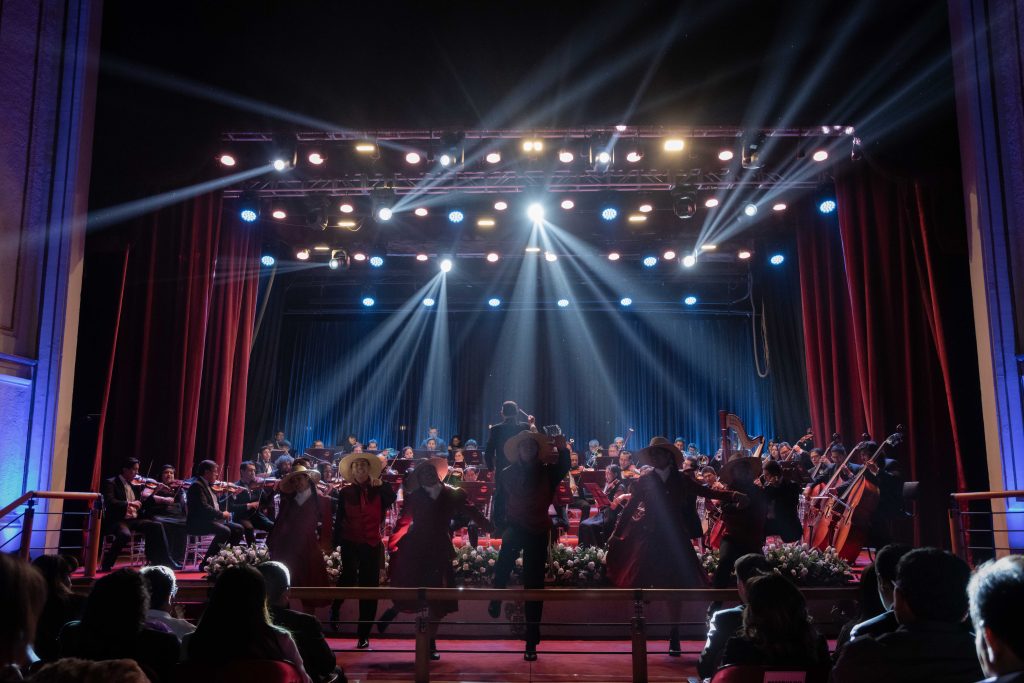

Impressions of Arequipa
These are the essential elements of a worthwhile stay: the old town, Santa Catalina, Yanahuara, the volcanic landscape, regional cuisine, and the journey to the Colca Canyon.

Plaza de Armas
Arcades, the cathedral and views of the volcano make the central square the best starting point.
Old Town
Churches, casonas, and sillar facades characterize the historic center.
Santa Catalina
The large monastery complex is one of the city's most important attractions.
Yanahuara
Stone arches and the view of Misti define the famous viewpoint.
Misti
The nearly symmetrical volcano is Arequipa's landscape landmark.
City Life
Markets, cafés, restaurants, and plazas make Arequipa interesting even away from the monuments.
Colca Canyon
Arequipa is the main gateway to Chivay, Cruz del Cóndor, and the Colca Valley.
Andean Landscape
Misti, Chachani, and Pichu Pichu provide the city with its distinctive setting.
Meldungen aus Arequipa
Alle Meldungen
16.10.2026
Billion-dollar bombshell in Peru! Four mega-projects – Northern Peru hits the jackpot!
Peru is planning four tourism megaprojects worth over 2.5 billion soles. Piura and...
Meldung lesen
16.10.2026
Nine women from Arequipa open up! Their lives, their struggles – it’s all in a book now.
Prejudice, inequality, and a life full of challenges! Nine women from the Peruvian...
Meldung lesen
15.10.2026
844 million dollars for a new mega-port! Does Peru really need Corío after Chancay?
Arequipa is planning the 844-million-dollar Corío megaport. But after Chancay, doe...
Meldung lesenHistorical center as the starting point.

The easiest place to start a walking tour is at the Plaza de Armas. From there, the Cathedral, Iglesia de la Compañía, historic Casonas, and many Sillar facades are all within walking distance.
The city center is very walkable. By strolling slowly through the side streets, you can discover courtyards, small shops, and the everyday rhythm of the city alongside the well-known buildings.
Santa Catalina: City within a city.
The Santa Catalina Monastery is much more than a single building. Alleys, cloisters, courtyards, and former living quarters form a large complex that is worth spending plenty of time exploring.
The red and blue wall surfaces are particularly striking. They create a strong contrast with the light-colored sillar stone that characterizes much of the rest of the cityscape.

Yanahuara and the view of the Misti.

The Mirador de Yanahuara is one of Arequipa's classic viewpoints. Through its stone arches, the city opens up before you, with the Misti volcano in view.
The neighborhood is worth visiting for more than just a photo. Quieter streets, traditional architecture, and its proximity to the city center make Yanahuara a pleasant contrast to the bustling old town.
Practical information about Arequipa, Peru
Arequipa is relatively easy to visit. However, you should realistically take altitude, the strong sun, and the planning of a Colca excursion into account.
Duration of Stay
Two to three days are sufficient for the city. Significantly more time should be allocated for Colca Canyon.
Altitude
Arequipa lies at around 2,300 meters, making it lower than Cusco or many places in the Altiplano.
Best time to visit
The drier months from approximately April to November are particularly suitable for sightseeing in the city and taking day trips.
Getting Around
The historic center can be easily explored on foot. For more distant destinations, taxis or ride-hailing services are suitable.
Food
At least one traditional Picantería should be part of the stay.
Colca
For the Colca Valley, an overnight stay is more pleasant than a very long round trip on the same day.
Arequipa as a starting point for the Colca Canyon.
Many trips to the Colca Canyon begin in Arequipa. The route leads through high-altitude Andean landscapes to Chivay and on to villages, hot springs, and viewpoints.
Those with enough time should plan to spend at least one night in the Colca Valley. This leaves more time for Cruz del Cóndor, local villages, and the significant changes in altitude along the route.

Peru für Zuhause
Zum Shop
PeruMagazin Peru Figurine – Personalized 3D Mini Figurine
Ab €79,00

The new minifigures for all ages! - The perfect gift
€15,00

PeruMagazine – Viracocha 3D figure
Ab €19,99

Perusina & Perusino – Gods with Superpowers – Inca Edition by Torsten Peters
€18,00

PeruMagazine – T-Shirt Nazca Visited (Black, White, Green)
Ab €14,90

PeruMagazin – T-Shirt Iquitos Visited (Black, White, Green)
Ab €14,90

Peru Magazine - T-Shirt Cusco Visited (Black, White, Green)
Ab €14,90

Peru Magazine - T-Shirt Lima Visited (Black, White, Green)
Ab €14,90

PeruMagazine - T-Shirt Machu Picchu Visited (Black, White, Green)
Ab €14,90

Perusino as a building block figure – cheeky, loud and finally here
€29,00

Perusina building block figure | PeruMagazin figure
€29,00

PeruMagazin Visited Piura T-Shirt
Ab €14,90

PeruMagazin Visited Máncora T-Shirt
Ab €14,90

PeruMagazin Visited Tumbes T-Shirt
Ab €14,90

PeruMagazine Visited Zorritos T-Shirt
Ab €14,90

PeruMagazine Visited Punta Sal T-Shirt
Ab €14,90

PeruMagazin Visited Los Órganos T-Shirt
Ab €14,90

PeruMagazin Visited Vichayito T-Shirt
Ab €14,90

PeruMagazin Visited Talara T-Shirt
Ab €14,90

PeruMagazin Visited Lobitos T-Shirt
Ab €14,90

PeruMagazine RAÍCES PERÚ Heavyweight T-Shirt
Ab €23,99

PeruMagazin RAÍCES PERÚ PIURA Heavyweight T-Shirt
Ab €23,99

PeruMagazin RAÍCES PERÚ Rolltop Backpack
€29,95

PeruMagazin – Pope's Visit to Peru T-Shirt
€19,95

PeruMagazin – Hope for Peru Rolltop Backpack
€29,95
FAQ about Arequipa, Peru
How many days should you plan for Arequipa?
Two to three days are sufficient for the city's main sights. For Colca Canyon, four to five days are more enjoyable.
Why is Arequipa called the White City?
Many historic buildings are made of light-colored sillar, a volcanic rock from the region.
How high is Arequipa?
Arequipa is located at an altitude of approximately 2,300 meters above sea level, making it significantly lower than many destinations in the Peruvian highlands.
Is Santa Catalina worth it?
Yes. The sprawling monastery complex is one of Arequipa's most important attractions and should not be rushed.
Is Yanahuara worth it?
Yes. The Mirador offers one of the most famous views of Arequipa and the Misti volcano.
What dishes are typical of Arequipa?
Notable examples include rocoto relleno, chupe de camarones, adobo arequipeño, and solterito.
Places to stay near Arequipa
Arequipa
Peru Magazine
Sources
UNESCO World Heritage Centre: Historical Centre of the City of Arequipa
MINCETUR and PROMPERÚ: tourist information about Arequipa and Southern Peru
Gobierno Regional de Arequipa: regional information about the city and its surroundings
Wikimedia Commons: images of Plaza de Armas, Santa Catalina, Yanahuara and Misti
PeruMagazin: Arequipa and Southern Peru as editorial context