

Wititi Dance in Colca Canyon: Culture and UNESCO Heritage
Wititi Dance in Colca Valley: Culture, Love, and Living Heritage
The Wititi dance from the Colca Valley in the Arequipa region is one of Peru's most famous traditional dances. Since 2015, it has been a UNESCO Intangible Cultural Heritage of Humanity.
Wititi at a Glance
The Wititi is a traditional dance from the Colca Valley in the province of Caylloma, Arequipa region. It is especially associated with festivals, religious celebrations, the beginning of adulthood, and the agricultural annual cycle.
UNESCO describes the Wititi as a dance that contains elements of a courtship ritual. Young men and women dance in groups, accompanied by music, colorful costumes, and clear step sequences.
The dance is not just a performance. It strengthens social bonds, local identity, and cultural transmission between generations.
Name
Wititi, Danza del Wititi del Valle del Colca
Region
Colca Valley, Caylloma Province, Arequipa
UNESCO
Intangible Cultural Heritage since 2015
Significance
Courtship ritual, transition to adulthood, and renewal
Typical Features
Colorful costumes, couple dancing, musical groups, and festive context
Travel Tip
Best experienced around local festivals in the Colca Valley
What is the Wititi Dance?
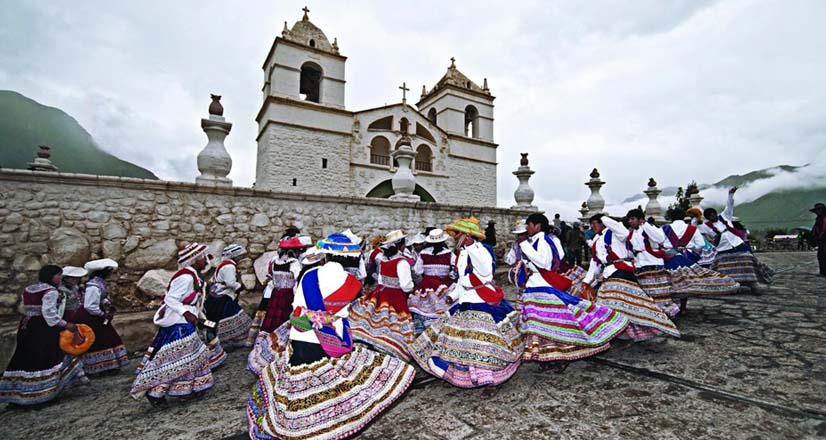
The Wititi is a traditional folk dance of the Colca Valley. It is danced in lines and groups, often by young men and women who perform as couples or ensembles.
Its movements combine festive energy, social interaction, and symbolic roles. The dance appears light and lively but is deeply rooted in local history.
For visitors, the Wititi is often a visually impressive moment: rapid turns, vibrant colors, embroidered clothing, hats, and music create a unique picture of Andean culture.
UNESCO Intangible Cultural Heritage
UNESCO inscribed the Wititi dance of the Colca Valley on the Representative List of the Intangible Cultural Heritage of Humanity in 2015.
This recognition is important because it protects not only a beautiful costume or a single performance. It is about knowledge, practice, transmission, community, and meaning.
The Wititi is learned through observation, participation, and familial or communal transmission. Children and young people experience it at festivals, school events, family celebrations, and local cultural events.
With the Wititi, the heritage is not in a museum. It lives in movement, music, clothing, festivals, and people who pass on the dance.
Origin in the Colca Valley
The Colca Valley is one of the most famous cultural landscapes in southern Peru. It is located in the Arequipa region and is known for both its landscape and its vibrant traditions.
The Wititi is particularly associated with the communities of the Colca Valley. Places like Tapay, Chivay, Yanque, and other communities in the valley appear in cultural lore.
It is important to note that the dance does not belong to a single village as decorative property. It is part of a larger cultural space where Cabana and Collagua traditions, local festivals, and regional identity intertwine.
A Dance of Courtship and Renewal
The Wititi is often described as a dance of love. This designation is fitting but should not be understood too romantically. The dance is associated with courtship, encounters, youth, social order, and the transition to adulthood.
At the same time, it falls within a festive and agricultural context. UNESCO points out that the dance is linked to the beginning of the agricultural production cycle and the renewal of nature and society.
Thus, the Wititi is more than a romantic scene. It connects relationships, community, festive times, and the natural order of Andean life.
Costumes and Clothing
The clothing is one of the most striking features of the Wititi. Women wear intricately embroidered garments with colorful motifs and characteristic hats.
Men traditionally wear elements that can resemble female clothing during the Wititi, including layered skirts. They often also wear military-style shirts, slings, and sturdy hats.
This clothing is not arbitrary. It carries meanings, local differences, and historical layers. Anyone who only looks at colors misses half the story.
PeruMagazin on WhatsApp
Receive new posts about Peru, history, culture, and travel directly in the WhatsApp channel.
To the WhatsApp ChannelForeverFig
Discover special figures, collectibles, and creative ideas around PeruMagazin.
Open ForeverFigMusic and Performance
The Wititi is accompanied by music, which can vary depending on the occasion and local tradition. At large festivals, ensembles, wind instruments, drums, and rhythmic accompaniment are often used.
The dancers move in groups, often in orderly lines. The repetition of steps, the turns, and the dynamics of the couples create a strong communal image.
Especially at festivals in the Colca Valley, it becomes clear that the Wititi is not meant for quiet contemplation. It belongs in public spaces, with music, encounters, and movement.
Wititi and Local Identity
For the people of the Colca Valley, the Wititi is an expression of regional identity. Communities sometimes compete to showcase particularly beautiful ensembles, good musicians, and impressive performances.
This competition is not just for show. It helps to keep the dance alive. Each performance renews the tradition without completely reinventing it.
The Wititi strengthens social bonds. Families, schools, communities, and cultural groups contribute to children and young people learning the forms of the dance.
The Wititi for Travelers
Visitors to the Colca Valley may be lucky enough to experience Wititi performances at local festivals, cultural events, or tourist presentations.
For travelers, it is important not to treat the dance merely as a photo opportunity. It is part of a living tradition and holds special significance for the communities.
Respectful proximity is better than intrusive camera hunting. Those who ask, observe, and take the context seriously will understand more.
Colca Valley, Arequipa, and Cultural Travel
The Wititi fits well with a trip through southern Peru. Many visitors associate the Colca Valley with Arequipa, volcanic landscapes, viewpoints, condors, and highland villages.
Those interested in culture should not only look at the landscape in the Colca Valley. Markets, festivals, clothing, music, and local everyday forms tell just as much, if not more.
The Wititi shows that culture in Peru is not only found in ancient ruins. It also continues to dance in squares, at festivals, and within families.
More Topics on Peru and Culture
These pages are a good fit for the Wititi dance, the Arequipa region, and cultural trips in Peru.
Frequently Asked Questions about the Wititi Dance
What is the Wititi dance?
The Wititi is a traditional dance from the Colca Valley in Arequipa. It is associated with courtship, youth, festivals, and regional identity.
Where does the Wititi originate?
The dance originates from the Colca Valley in the province of Caylloma, Arequipa region.
Is the Wititi a UNESCO World Heritage?
The Wititi is not a tangible World Heritage but has been a UNESCO Intangible Cultural Heritage of Humanity since 2015.
When is the Wititi danced?
It is particularly danced at religious festivals, local celebrations, and cultural events, often during the rainy season and in connection with the agricultural cycle.
Why do men wear special clothing during the Wititi?
Male clothing includes traditional roles and symbolic forms. These include layered skirts, shirts, hats, and other elements.
Can travelers see the Wititi?
Yes, especially in the Colca Valley and at festivals in the Arequipa region. Visitors should photograph respectfully and observe local rules.
Sources
UNESCO – Wititi dance of the Colca Valley
Ministerio de Cultura del Perú – Danza del Wititi del Valle del Colca
Ministerio de Cultura del Perú – Information on UNESCO recognition of the Wititi
Centro Cultural Inca Garcilaso – Wititi dance of the Colca Valley
Peru.info – Information on the cultural significance of the Wititi
Specialized literature on dances, festivals, and intangible cultural heritage in the Colca Valley
Leave a comment